Saffron Science

The eye searches land on the same trials.

If you came looking for saffron for eyes, or for eyesight, you deserve the same studies in ordinary words. People with mild to moderate macular degeneration took about 20 milligrams of saffron a day. Against a placebo, the eye chart moved 0.69 letters, less than one line, and the retinal recording answered a little sooner. The authors called it modest. Sight was not given back. Macular degeneration is the main condition on this page. Glaucoma and diabetic maculopathy have thinner notes below, and they used different preparations. The fuller macular reading lives on saffronvision.com.

The chart. Each row is one line, and one line is five letters. The careful trial moved the chart by 0.69 letters, less than one letter on a line like these. This sample is not that result.

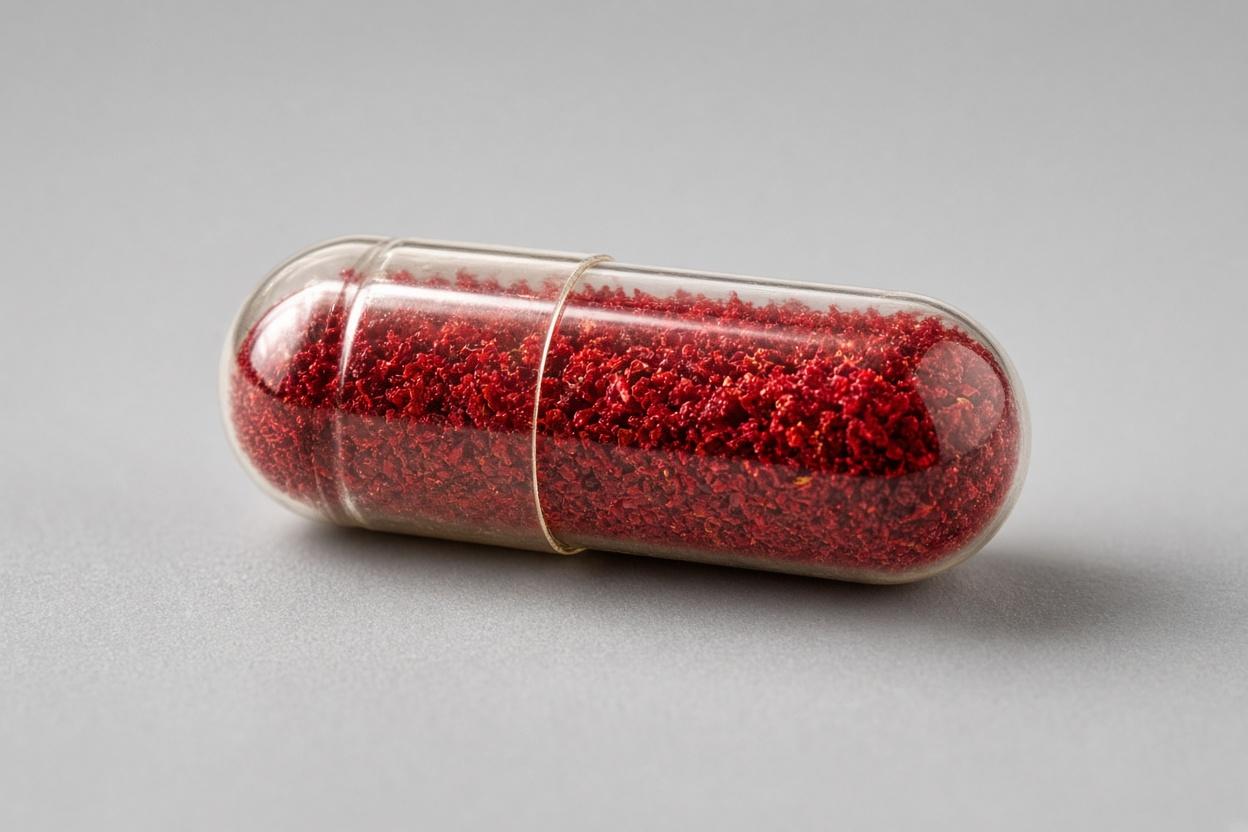
A clear capsule filled with deep red saffron powder.

The capsule. The macular trials used 20 milligrams a day of saffron, by mouth. That is a study amount, not a pinch from the kitchen.

An eye chart and a capsule, set side by side so the two are easy to tell apart. The numbers stay in the sentences. This is not a bottle we sell.

What the studies have found

A small chart change, and a recording that looked a little better.

The careful trial and the later open extension are the same papers the vision room holds. Here they are in brief, so an eye search still gets the numbers. The changes are generally modest.

The placebo trial

Less than one letter, with the glasses that help you most.

One hundred adults over 50, with mild to moderate macular degeneration and vision better than 20/70 in at least one eye, took 20 milligrams a day. Three months on saffron, three months on a placebo, then they switched. Anyone already taking an AREDS supplement kept it. Best-corrected acuity improved by 0.69 letters. The retinal recording, the mfERG, answered 0.17 milliseconds sooner. In the people who stayed on AREDS, the chart moved 0.73 letters and the response density rose 2.8 percent. Side effects were not clearly different from placebo.

PubMed 30343354

A year on

The modest signal that remained was the recording.

A 12-month open extension stayed with 93 adults on the same 20 milligrams a day. There was no placebo. At a year the center of the retinal recording was stronger, and the timing did not clearly change. Best-corrected acuity was 1.6 letters worse. The small chart gain from the crossover did not continue. An earlier open follow-up of 29 people described a larger chart change against where each person started. That study had no placebo, and it is not the 0.69 letter result. Both are written out on the vision page.

PubMed 38485112 · PubMed 22852021 · The full reading

Limits that matter

A slightly clearer recording is not new eyesight.

If you are hoping for a clearer newspaper, or a face across the room, these papers are smaller than that hope. The groups were 100, 93, and 29 people. Some of the work had no placebo. A better electrical recording is not yet everyday sight, and larger independent repeats are still limited.

Macular degeneration is the main condition in this research. The American Academy of Ophthalmology has called that evidence very limited, and that note is older than the crossover. The vision page keeps the citation. These papers do not say saffron treats, cures, or replaces standard care for macular degeneration, or for any other eye condition.

Glaucoma is one small pilot, beside the drops.

One randomized pilot followed 34 people with stable open-angle glaucoma who were already using timolol and dorzolamide drops. For one month, 17 took 30 milligrams a day of an aqueous saffron extract and 17 took a placebo, on top of those drops. Eye pressure was lower in the saffron group after three weeks, and still lower at four weeks. After a month off the capsules, the two groups were no longer clearly apart. No one in that short study reported a side effect. The drops were never stopped. A month in 34 people is not a new plan for glaucoma.

PubMed 25319729

Diabetic maculopathy was a crocin tablet, not the macular capsule.

One placebo-controlled trial looked at 101 eyes of 60 people whose diabetic macular edema had already not responded to usual care, including laser and an injected medicine. They took a crocin tablet, a constituent of saffron, at 5 milligrams or 15 milligrams a day, or a placebo. The 15 milligram group showed a thinner central macula and a chart change compared with placebo. The 5 milligram group did not clearly separate from placebo. The authors called it a short-term finding and said a larger, longer study is still needed, including people who had not already failed usual care. That tablet is not the 20 milligram saffron dose in the macular trials.

PubMed 29550187

What the studies said about feeling unwell.

In the macular crossover, side effects were not clearly different from placebo. In the 12-month extension, no serious adverse event was tied to the saffron. The glaucoma pilot reported none during that month or the washout. Those are reports from the studies, not a promise that a capsule will agree with you. The preparations were not the same thing: about 20 milligrams of oral saffron in the macular work, 30 milligrams of an aqueous extract in the glaucoma pilot, and a 5 or 15 milligram crocin tablet in the diabetic trial. None of those is a kitchen pinch, and none is an amount this page is handing you.

The macular limits, in full
Forms used in the research

About 20 milligrams a day, by mouth.

The macular studies used a measured oral amount of saffron, about 20 milligrams a day. That is a description of the research, not an amount to take. The glaucoma pilot used 30 milligrams of an aqueous extract. The diabetic trial used a crocin tablet at 5 or 15 milligrams. A kitchen pinch is food, and it is a different exposure from all three. The macular summaries do not hand you a crocin percentage or a brand.

How the vision page says this · The compounds, on the hub

How to read a paper

The same questions, asked once.

Before a study reassures you, look for a randomized design, a placebo, the dose, the months, and whether the test was the letter chart or the mfERG. The vision room walks through those questions beside the numbers. The hub keeps the general habit of reading a saffron paper.

How the vision page reads a trial · How the hub reads a paper

Where to go for the rest

The full macular reading is one room over.

The macular trials are told in full one room over, so the two pages do not say the same thing twice. The extract review and the best-supplement page are not open yet. When they are, the macular summary they should cite is the vision page. Nothing here is for sale.

A last word

Eyesight is a medical question.

Age-related macular degeneration is a medical condition. What you have read is a short description of published research. Your eyes can answer differently from the group. This page is not a substitute for the clinician who knows them, and it does not replace standard care.

Nothing here says saffron treats, cures, or replaces standard care for macular degeneration or for any other eye condition. Pregnancy is a reason to skip a supplement. If you already take a medicine, an eye drop, an injection, or an AREDS supplement for your sight, talk with the person who prescribed it before you add saffron, and before you stop anything. The trials used 20 milligrams a day, by mouth. A large amount of raw threads is a different exposure, and these studies did not test it.

If the worry around your sight has turned toward harming yourself, please reach a person. In the United States you can call or text 988, or visit 988lifeline.org. You do not have to sit with that alone.

If a bottle is ever linked from this house, someone will have opened the Amazon or Walmart page first. A future affiliate program may earn a commission from that visit. None is connected today. There is no product on this page, and no price.